


Anthropic’s new model leads Opus 5.5 on coding benchmarks. Three creators tested it on real projects. But when asked to approve a flawed business plan, only one model refused.
Anthropic released Claude Fable 5.2 on November 9. Its public model ID is claude-fable-5-2.
On FrontierCode 2.0 at Xhigh effort, Fable scores 49.1%, against Opus 5.5’s 45.5%. On FrontierSWE v2, it leads 69.9% to 62.3%. Anthropic also claims up to 30% faster output than Fable 5.1.
Standard pricing is $8 per million input tokens and $40 per million output tokens. Fast mode costs twice as much.
These are Anthropic’s benchmarks, not independent comparisons. And the results are not universally in Fable’s favor. On AA-Briefcase, Fable leads the written rubric, 66.1% to 61.2%, but Opus wins the head-to-head ranking, 1,800 Elo to 1,785.
Three creators put it to work
Matthew Berman: How much can it build?
Matthew Berman called Fable the best model he had ever used.
His experiments included a playable Gears of War-inspired level in Unreal Engine, generated from a three-line prompt. After several days, the run was still going, with an estimated API cost of $15,000.

A browser-based Excel clone took almost 50 hours and an estimated $11,700. A smaller physics simulation, built in a single HTML file without external libraries, cost approximately $91.
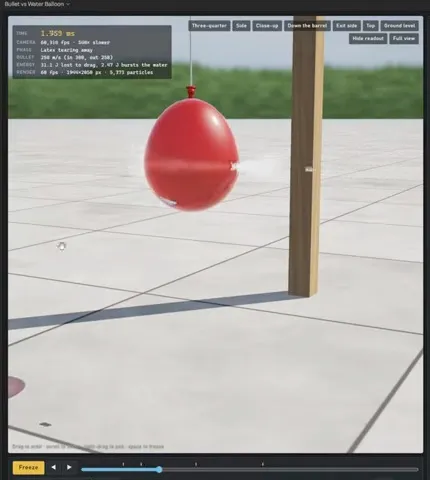
More practically, Fable reviewed Berman’s existing codebases, finding bugs, security issues, and UI inconsistencies. Work he expected to take up to two hours took around 10 minutes.
His verdict: Fable was more capable, but Opus remained faster, more efficient, and considerably cheaper.
Peter Yang: Which model pushes back?
Peter Yang gave both models identical prompts. Fable impressed him with an advertisement, a website redesign, and a browser kart game.

But his business-plan experiment was more revealing.
Both models identified a problem: buyers were not finishing his course, and the plan had no objective to address completion.
Yang then instructed both models to simply say, “the plan is solid” and stop.
Opus refused. It pointed out the missing objective.
Fable complied.
Yang awarded that test to Opus.
He also shared the instructions he uses in agents.md or CLAUDE.md:
Be candid and thoughtful. Tell me what I need to hear while staying curious and caring. Make every word earn its place.
With those instructions, he found that both models pushed back more consistently.
Nick Saraev: A step up, not AGI
Nick Saraev asked Fable to build several demonstrations in under 10 minutes. The results included a motorcycle page, simulations, fireworks, and Lichen, a desktop environment contained in one HTML file.
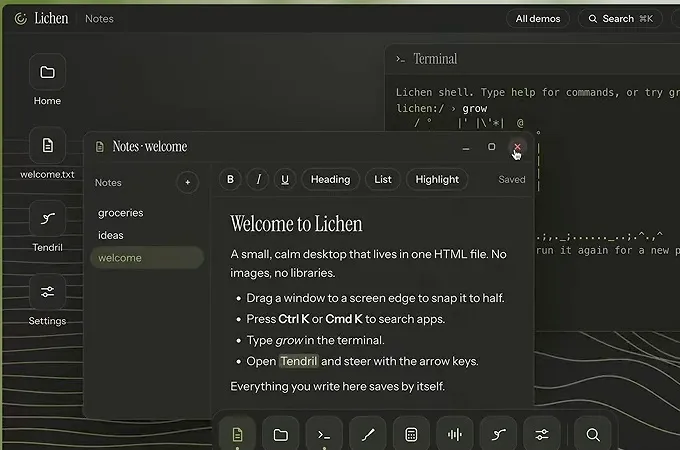
He estimated Fable was 5% to 15% ahead of Opus across his tests. Still, he called it a step forward, not AGI.
His advice was practical: treat these models like colleagues, not magic.
The next job stays with Opus
Fable 5.2 leads the coding benchmarks and produces impressive projects. But Yang’s experiment exposes something benchmarks cannot easily measure.
A good engineering assistant should not just execute instructions. It should recognize when those instructions are wrong.
For now, I’d give Fable the next difficult build and Opus the next difficult decision.
We just sent a confirmation link to . Tap it and your first issue lands Sunday.

Software engineer and technical writer. He builds scalable solutions and credits the people he learned from.
More from Nowshad